The Economics of Tariffs: Understanding Market Friction
Legal Disclaimer & Disclosure
This content is strictly for educational purposes. I am not a SEBI-registered Investment Adviser (RIA) or Research Analyst (RA). Nothing posted here should be construed as an offer to buy/sell or a recommendation of any security.
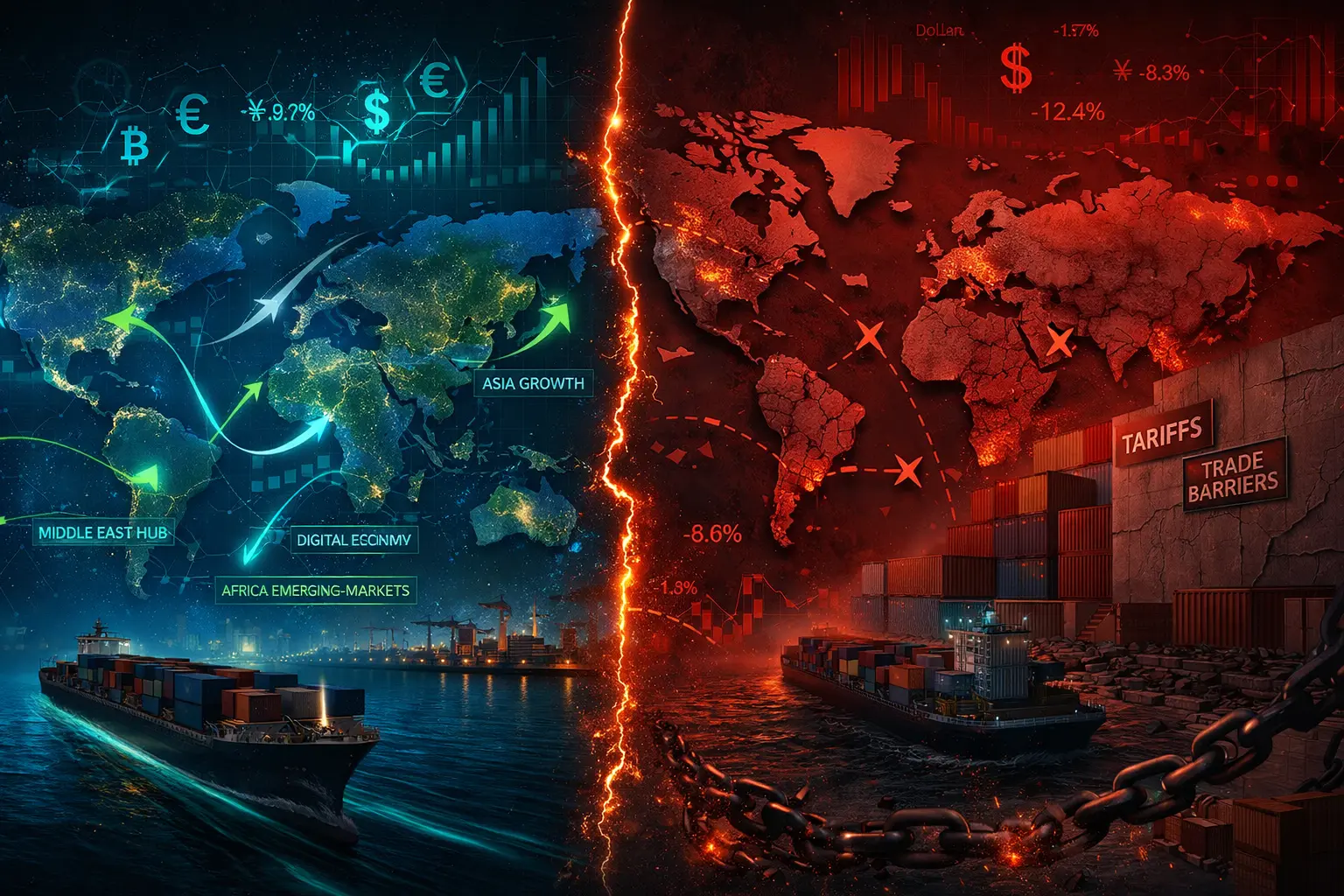
Quick Take: The Tariff Ripple Effect
The Core Friction: Tariffs are essentially a "tax on the consumer," increasing COGS and fueling domestic inflation.
The Strategy Shift: Global firms are moving from "Efficiency" to "Resilience" via near-shoring—a costly structural change.
The Investor Outlook: Expect higher volatility and a stronger USD as markets price in "Tit-for-Tat" retaliation cycles.
1. Corporate Profits and Supply Chains
Tariffs directly increase the "Cost of Goods Sold" (COGS) for companies that rely on global supply chains:
- Input Costs: If a manufacturer in India imports steel to build cars and a tariff is placed on that steel, the cost of production rises. This either squeezes profit margins or forces price hikes for consumers.
- Supply Chain Relocation: To avoid trade barriers, companies engage in "near-shoring" or "friend-shoring." This relocation is a massive capital expense that can hurt short-term earnings.
2. Inflation and Consumer Spending
Tariffs are often described as a "tax on the consumer" because the costs are rarely absorbed by the corporation alone:
- Price Hikes: When companies face 25% tariffs on components, most of that cost is passed to the end-user, contributing directly to higher inflation.
- Reduced Purchasing Power: As everyday goods become more expensive, consumers have less disposable income, which can lead to a slowdown in overall GDP growth.
3. Currency Markets (Forex)
Tariffs create complex movements in the currency markets:
- Currency Weakness: Targeted countries often see their currency weaken, a natural market reaction that makes their exports more affordable to offset the tariff.
- Safe-Haven Flows: During trade wars, investors flee to "safe-haven" currencies like the US Dollar or the Swiss Franc to seek stability amidst geopolitical uncertainty.
4. The "Retaliation" Cycle
Rarely does a tariff exist in a vacuum; they almost always trigger a "Tit-for-Tat" response:
- Counter-Tariffs: If one nation targets electronics, the other may retaliate by targeting agricultural exports, widening the economic impact.
- Market Volatility: This cycle creates high uncertainty. Markets tend to react with sharp sell-offs in equity indices whenever trade negotiations deteriorate.
Summary Checklist: Winners and Losers
| Stakeholder | General Impact | Why? |
|---|---|---|
| Domestic Producers | Winner (Short-term) | Less competition from cheaper foreign goods. |
| Multinational Corps | Loser | Higher operational costs and supply chain disruption. |
| Consumers | Loser | Higher prices for finished goods (Inflation). |
| Exporters | Loser | Targeted by retaliatory tariffs from other nations. |
Conclusion
Tariffs are a form of Protectionism that prioritizes domestic industry at the expense of global efficiency. For an investor, rising tariffs usually signal a shift away from high-growth global trade toward a more fragmented, inflationary, and volatile market environment.